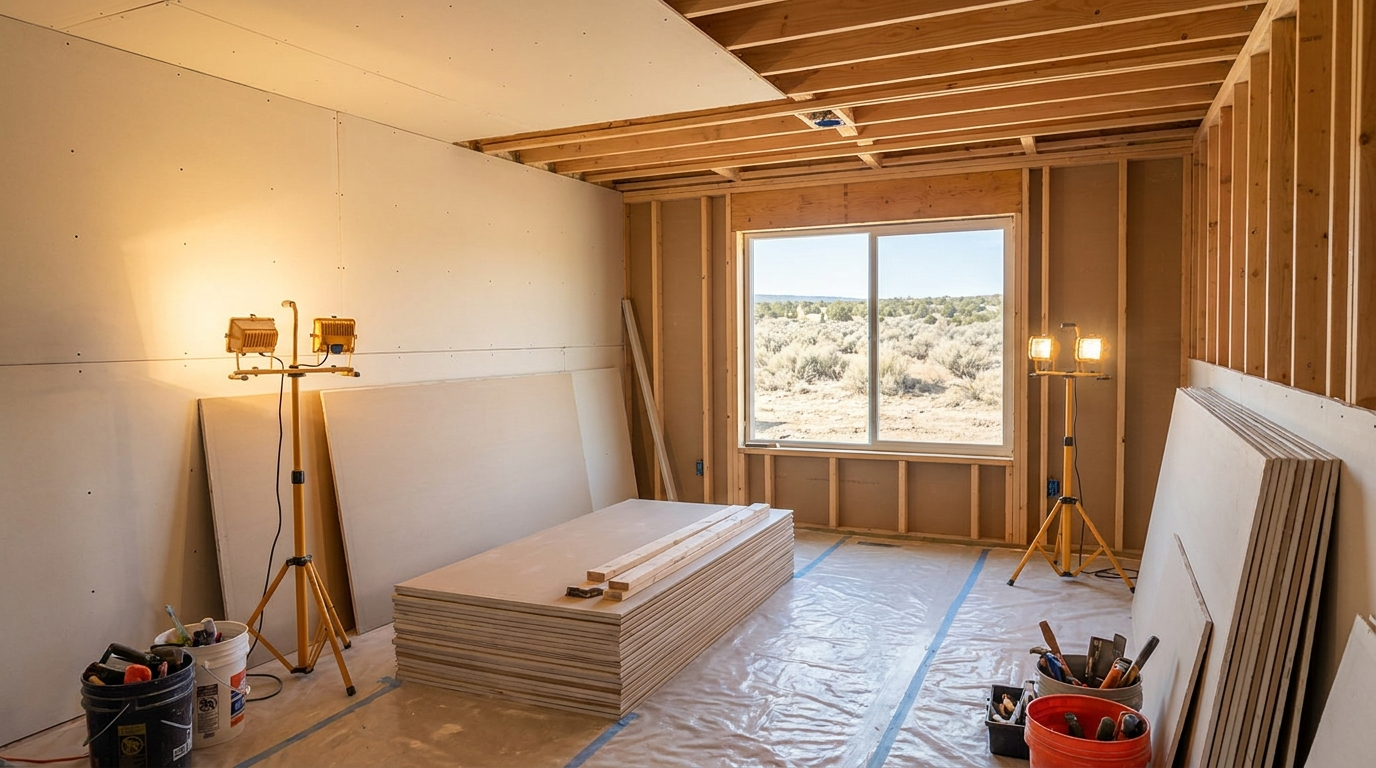
After a water loss, the first few days are loud: fans, dehumidifiers, and a mitigation crew cutting out wet drywall and pulling up flooring. Then the equipment leaves, and you're standing in a house with open walls and bare subfloor. This is where reconstruction starts, and it's the part most homeowners know the least about.
Mitigation and Reconstruction Are Two Different Jobs
Mitigation is the emergency work: water extraction, tear-out of wet materials, and drying until moisture readings are back to normal. Reconstruction is the rebuild: putting back everything that was damaged or removed. They're often done by different companies. Summit Buildworks does reconstruction only. We start after the mitigation company has finished drying.
What Gets Rebuilt
It depends on how far the water traveled, but a typical rebuild includes:
- Insulation and drywall, including the lower few feet of walls that were cut out ("flood cuts").
- Baseboards, door casing, and trim.
- Flooring: carpet and pad, laminate, vinyl, hardwood, or tile.
- Cabinets and countertops, if they were damaged or had to be removed to dry the walls behind them.
- Doors, paint, and finish work.
- Any electrical, plumbing, or HVAC components that were damaged.
The Reconstruction Process
1. Walk-Through and Scope
We walk the house, measure, and walk you through the reconstruction scope: what's being rebuilt, in what order, and with what materials.
2. Selections
If materials need to be matched or chosen — flooring, cabinet finishes, paint — we sort that out early, because lead times on some materials drive the schedule.
3. Permits, If Required
Some rebuilds need a permit, especially when electrical, plumbing, or structural work is involved.
4. The Rebuild
Insulation and drywall first, then trim, cabinets, flooring, and finishes.
5. Final Walk-Through
We walk the finished space with you before we call it done.
Can I Upgrade While We're Rebuilding?
Yes. Many homeowners use a rebuild as a chance to upgrade: better flooring, a new cabinet layout, or finishing more of the basement while the walls are open. We keep the insurance-covered work and the homeowner-paid upgrades on separate line items, so it's always clear what you're paying for.
How Long Does It Take?
It depends on how much was damaged and on material lead times. Our average is 19 to 22 days from start to move-back-in, and before work starts you'll get a written schedule for your specific job.
What About the Insurance Side?
Your insurer decides what's covered, and questions about your claim go to your adjuster or agent. Our job is the rebuild: we walk you through the reconstruction scope and keep you updated until you're back home.
If You're Still in the Mitigation Phase
If the drying crew hasn't finished yet, you can still call us now and schedule a reconstruction walk-through for when drying is complete. And if you need a mitigation company, we can refer you to one.
Insurance restoration · For mitigation companies · Request a free assessment